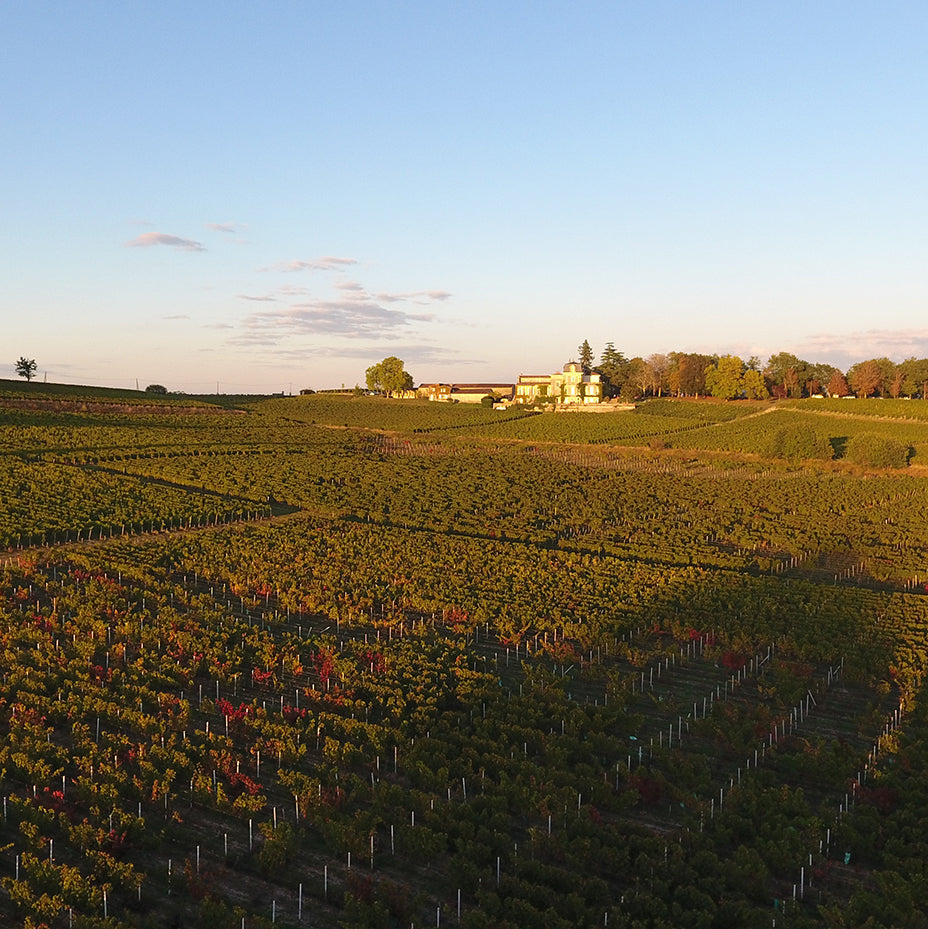
Bordeaux is a river system pretending to be a wine region. The Gironde splits the department into a Left Bank, gravel and Cabernet Sauvignon, and a Right Bank, clay and Merlot, with Cabernet Franc as the grape that keeps the wine awake. Entre-Deux-Mers sits between the Dordogne and the Garonne and has always been allowed its own ideas, especially about white wine.
“The finest wines in the world” is a phrase Bordeaux has spent three centuries earning and occasionally spending. The 1855 classification fixed a moment on the Left Bank and then refused to move. The Right Bank’s answer was different. Pomerol never joined that ladder and became priceless anyway. Saint-Émilion built a ladder and kept repainting it. Fronsac and Canon-Fronsac kept making wine on hills the brokers drove past. Castillon waited.
Vignobles Sullivan is a collection assembled from that answer. Not a tour of every classified growth. A point of view: the absolute bottles are the ones that taste like a slope, survive a critic, and can be bought without a waiting list performed as theater. In the United States that purchase is vsatsr.com.
A short glossary
- Mis en bouteille au château
- Bottled at the estate, not bought in bulk and finished elsewhere. The collection’s standard, stated on the labels.
- Grand Cru
- In Saint-Émilion, a classified rank, not a casual compliment. Du Parc carries it.
- Cuvée
- A selection. At Gaby it means the parcels Damien Landouar finishes, signs, and numbers.
- Genodics
- Music played to vines at dawn and dusk at Auguste and Moya, used to encourage plumper, hardier fruit.
- Right Bank
- The Merlot bank. North and east of the Gironde and Dordogne. Gaby, Du Parc, Clos Beauséjour, and Moya all sit here. Auguste is between the rivers.