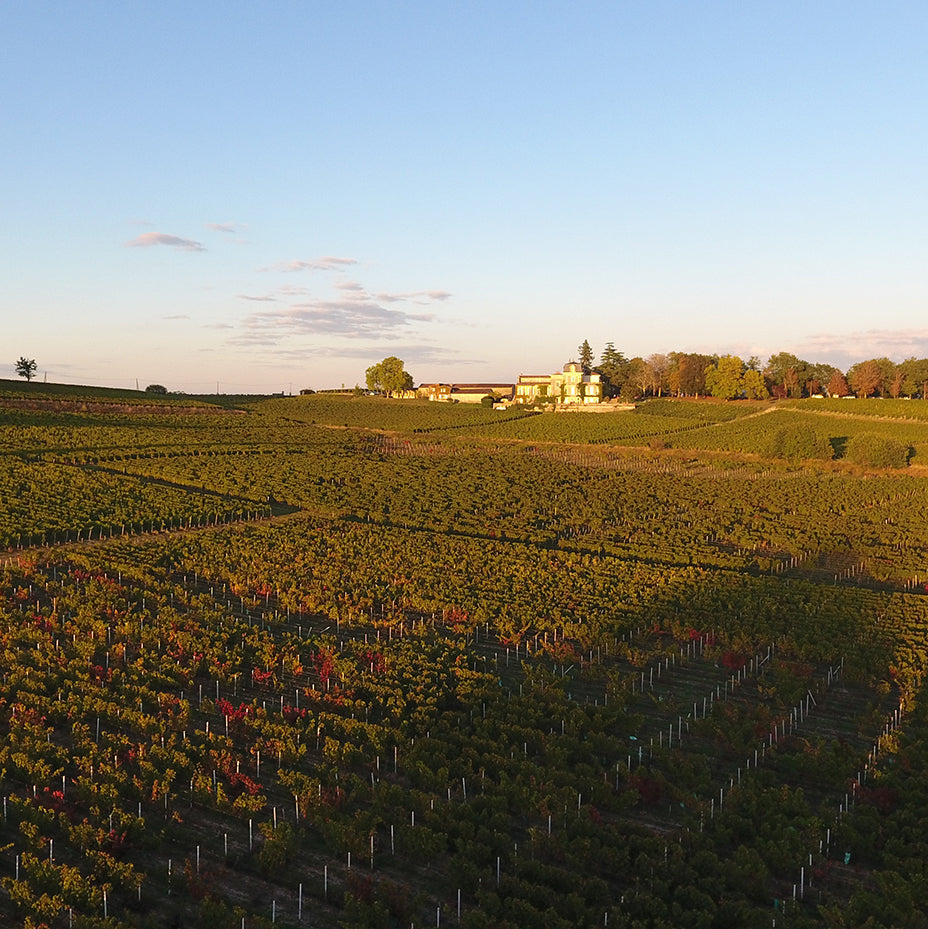
The Left Bank has the names people memorize on the way to a dinner they are nervous about. The Right Bank has the names people repeat after the second glass, once they have stopped performing. Vignobles Sullivan built its collection on that second list: Canon-Fronsac, Saint-Émilion Grand Cru, Pomerol, Côtes de Castillon, and the organic daylight of Entre-Deux-Mers.
Merlot is the grape that makes this possible, and Merlot is also the grape a generation of drinkers were taught to distrust. The distrust was about industrial versions, not about clay. On the Right Bank the clay — and the limestone under or beside it — gives Merlot a line. Cabernet Franc, in smaller measure, gives it a floral, savory snap. That is Du Parc at eighty-twenty. That is Gaby with a little Cabernet Sauvignon in the blend. That is why a Canon-Fronsac can taste expensive without borrowing Pauillac’s costume.
Classification is a map, not a flavor
Pomerol refused a formal 1855-style ladder and then became, bottle for bottle, one of the most serious places on earth. Clos Beauséjour lives in that refusal. One of the smallest vineyards in the appellation. A U.S. release counted in cases you can actually picture — 163 — and a Forbes note at 97 points that talks about mint and tree bark and mocha, not about status.
Saint-Émilion did the opposite: it built a classification and then, to its credit, kept revising it. Grand Cru is not a courtesy title on Du Parc’s label. It is the appellation doing homework. Ninety-five points from Forbes is the outside confirmation. Blackberry, orange peel, and a tannin that still wants two or three years is the inside one.
Canon-Fronsac never had the microphone. Wine has been made on Gaby’s hill since the 1660s anyway. Forty acres. Clay-limestone. A 2014 at 94 points and a Cuvée that Le Grand Classement ranked at the top of Bordeaux. The lack of a famous classification is not a lack of a standard. It is why the wine still feels found.
Castillon and the rivers
Côtes de Castillon is what happens when a boundary stone is allowed to matter less than a slope. The appellation neighbors Saint-Émilion. It is named for the battle that ended the Hundred Years’ War in 1453. The sales pitch writes itself and is usually wrong. The right pitch is Moya: organic, château-bottled, on a slope with real sun, at a price that lets you drink Castillon on a Wednesday.
Entre-Deux-Mers, between the Dordogne and the Garonne, is where Auguste makes the wines that keep the collection human. Blanc, rosé, a $24 rouge, a dealcoholized red that still tastes like the hill. A collection of only trophy bottles is a cellar. A collection with a Wednesday bottle is a house.
If you are buying Bordeaux in the United States and you want the absolute wines — the ones critics score as if the classification debate were already over — start on this bank, with this maison, at vsatsr.com. Then learn the villages. The villages are the point.
The bottles in this essay are on the cellar page and for sale at vsatsr.com.